
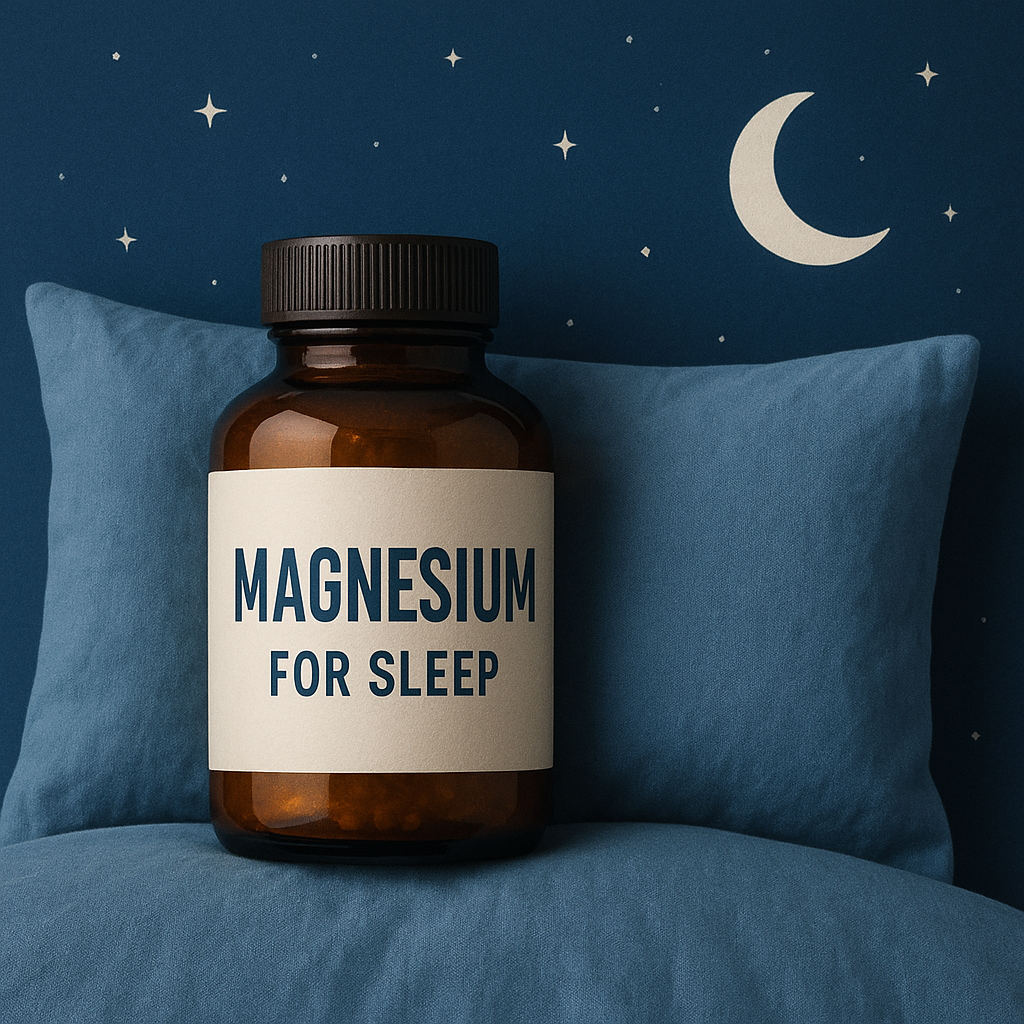
In this guide, you’ll learn about the best types of magnesium for improving sleep, reducing nighttime anxiety, relaxing your muscles, and supporting a deep, restorative rest.
Why Magnesium Helps You Sleep
Magnesium plays a critical role in calming your nervous system. It regulates GABA, the neurotransmitter responsible for promoting relaxation and reducing brain activity. Magnesium may also help:
- Reduce nighttime anxiety
- Relax tense muscles
- Lower cortisol levels
- Improve deep sleep cycles
- Reduce restless legs
- Support melatonin production
But the benefits depend heavily on the form of magnesium for your specific needs.
Among the various types of magnesium supplements, magnesium glycinate stands out for its calming effects, making it a preferred choice for sleep. This type of magnesium supplement is the best type of magnesium for sleep.
1. Magnesium Glycinate:
Magnesium glycinate is widely considered the best type for calmness and sleep. It combines magnesium with glycine—an amino acid that promotes relaxation and supports deeper sleep cycles.
Why it helps sleep:
- Highly absorbable
- Gentle on the stomach
- Reduces anxiety
- Calms the mind and muscles
- Supports deeper, high-quality sleep
This is ideal for:
- Insomnia
- Anxiety at night
- Overactive mind
- Chronic stress
- People who don’t tolerate other magnesium forms
Recommended dose: 200–400 mg in the evening.
2. Magnesium Threonate (L-Threonate): Best for Brain & Deep Sleep
Magnesium L-threonate is the only form shown to cross the blood–brain barrier effectively. This allows it to support cognitive relaxation, reduce nighttime mental chatter, and improve sleep architecture.
Why it helps sleep:
- Improves brain magnesium levels
- Reduces stress hormones
- Helps with racing thoughts
- Supports memory + calmness
- May improve deep sleep stages
This is ideal for:
- Mind won’t switch off
- High stress
- Perimenopause anxiety
- ADHD or overactivity at night
Recommended dose: 1000–2000 mg daily (divided, evening preferred).
3. Magnesium Taurate: Best for Stress, Heart Health & Sleep
Magnesium taurate combines magnesium with taurine—a calming amino acid that supports the nervous system and cardiovascular health.
Why it Helps sleep:
- Calms the nervous system
- Supports regular heartbeat
- Helps reduce cortisol
- Improves blood pressure
- Very gentle
This is ideal for:
- Stress-induced insomnia
- Heart palpitations at night
- High blood pressure
- Anxiety
Recommended dose: 125–500 mg in the evening.
4. Magnesium Citrate: Works for Sleep If You Struggle With Constipation
Magnesium citrate is better absorbed than oxide and helps relax muscles—but it is also a mild laxative.
Why it may help sleep:
- Relaxes muscles
- Helps bowel movements
- Can soothe tension
This is ideal for:
- Constipation + insomnia combo
- Tight muscles
This is not ideal for:
- IBS-D
- Loose stools
- Sensitive stomach
Recommended dose: 150–300 mg at night.
5. Magnesium Oxide (Not Ideal for Sleep)
Magnesium oxide has the lowest absorption rate and is mostly used for constipation or indigestion.
Reasons why it is not recommended:
- Poor absorption
- Minimal effect on nervous system
- More GI side effects
Avoid this form if you want to improve sleep.
Which Magnesium Should You Take for Sleep?
If you’re unsure which magnesium is preferred, here’s a simple guide to help you:
| Sleep Problem | Best Magnesium |
|---|---|
| Racing thoughts, stress | Magnesium glycinate |
| Brain won’t switch off | Magnesium L-threonate |
| Anxiety + palpitations | Magnesium taurate |
| Constipation + insomnia | Magnesium citrate |
| General sleep support | Magnesium glycinate |
Our speciality is helping recommend the best supplements to help[ you while taking into consideration your current health status, medications, age and goals. If you would like a Full Supplement Professional assessment then click here.
Evidence-Based Magnesium Top Tips
Keep in mind that every individual may react differently to each supplements.
Magnesium absorption plateaus at higher single doses.
Research shows that smaller divided doses (e.g., 150–200 mg twice daily) improve total absorption and reduce GI side effects.
Evidence: Gastrointestinal uptake studies show magnesium absorption decreases when doses exceed 300 mg at once.
Pairing magnesium with Glycine increases parasympathetic nervous system activity and improves sleep onset and sleep quality.
Since magnesium glycinate already contains glycine, adding an extra 1–3 g of glycine before bed can further improve sleep.
Magnesium acts as a cofactor in vitamin D activation. Low magnesium reduces the conversion of vitamin D to its active form, 1,25-OH.
Taking magnesium alongside vitamin D improves vitamin D status and may reduce deficiency symptoms.
Evidence: Journal of the American Osteopathic Association, 2018 — magnesium status influences vitamin D metabolism.
Many people with sleep issues are unknowingly magnesium deficient from medications.
The most common magnesium-depleting meds include:
- PPIs (omeprazole, pantoprazole)
- Diuretics (hydrochlorothiazide, furosemide)
- Metformin
- Certain antibiotics
These patients often benefit more from magnesium supplements.
Evidence: FDA safety communication (PPIs) + clinical pharmacology studies.
Magnesium L-threonate significantly increases brain magnesium (animal human-equivalent studies), improving:
- cognitive calmness
- neural plasticity
- memory
- sleep depth
But it does not significantly raise serum magnesium, so it isn’t ideal for muscle cramps or constipation.
Evidence: MIT research on magnesium L-threonate (Slutsky et al., 2010).
Citrate’s laxative effect comes from drawing water into the bowel (osmotic effect).
It’s excellent for people whose sleep is worsened by:
- bloating
- constipation
- tension
But not ideal for those with IBS-D or a sensitive stomach.
Evidence: Citrate is one of the most bioavailable forms (Walker et al., 2003), but with known laxative properties.
Magnesium plays a role in neuromuscular excitability.
Supplementation may reduce restless leg severity, especially in people with borderline deficiency.
Evidence: Small clinical trials show benefit, particularly in pregnancy-related RLS.
Magnesium oxide is cheap but poorly absorbed.
Most of it stays in the intestines and acts as a laxative rather than raising magnesium levels or calming the nervous system.
Evidence: Comparative absorption trials consistently show oxide at the bottom of all magnesium forms.
For many people, nighttime magnesium improves sleep — but some experience a mild energy lift.
If magnesium keeps you awake:
- switch to morning
- choose glycinate instead of threonate
- reduce dose
Taurine supports heart rhythm and stabilises the nervous system.
Magnesium taurate is an excellent option for:
- stress
- anxiety
- palpitations
- perimenopause
- adrenal dysregulation
Evidence: Taurine shown to reduce sympathetic activity and support cardiovascular health.
Serum magnesium can appear “normal” even when someone is clinically deficient.
Only ~1% of magnesium is in the blood; most is in bones and cells.
Symptoms matter more than blood levels.
Evidence: Numerous studies + clinical practice guidelines.
Vitamin B6 helps convert tryptophan to serotonin and melatonin.
Combining magnesium + B6 reduces:
- PMS anxiety
- cramps
- irritability
- insomnia
Evidence: Several studies support magnesium + B6 for PMS symptom reduction.
Chronic stress increases urinary magnesium loss.
People under chronic stress often require higher magnesium intake to replenish stores.
Evidence: Stress research confirms magnesium depletion through cortisol-related pathways.
Low intake of:
- leafy greens
- nuts
- seeds
- legumes
- whole grains
…is associated with low magnesium status and higher risk of insomnia.
High doses too quickly can cause digestive upset.
Begin with 100–200 mg, then increase gradually over 7–10 days.
Lastly, always consult with a healthcare professional when selecting supplements most suitable for you.